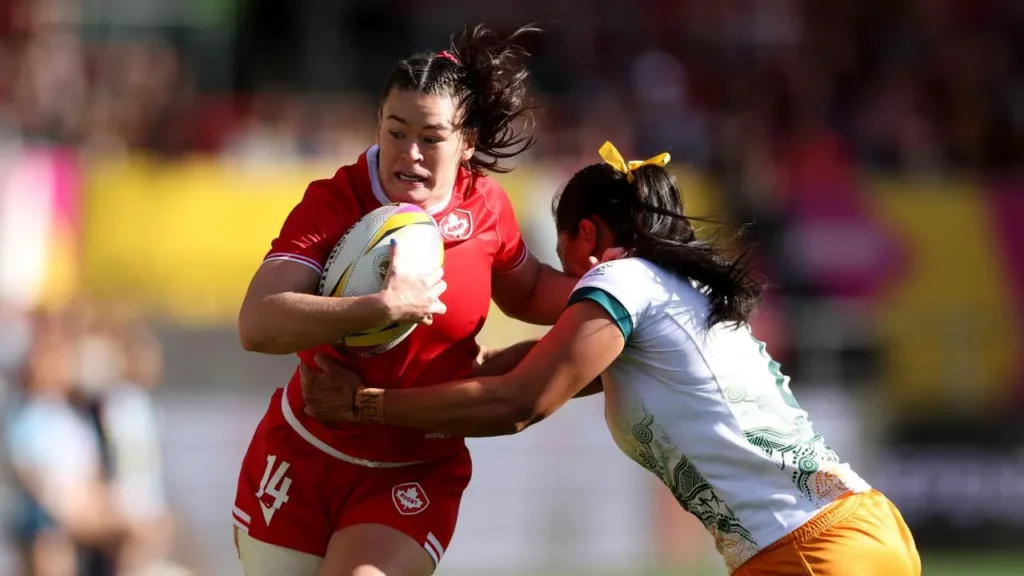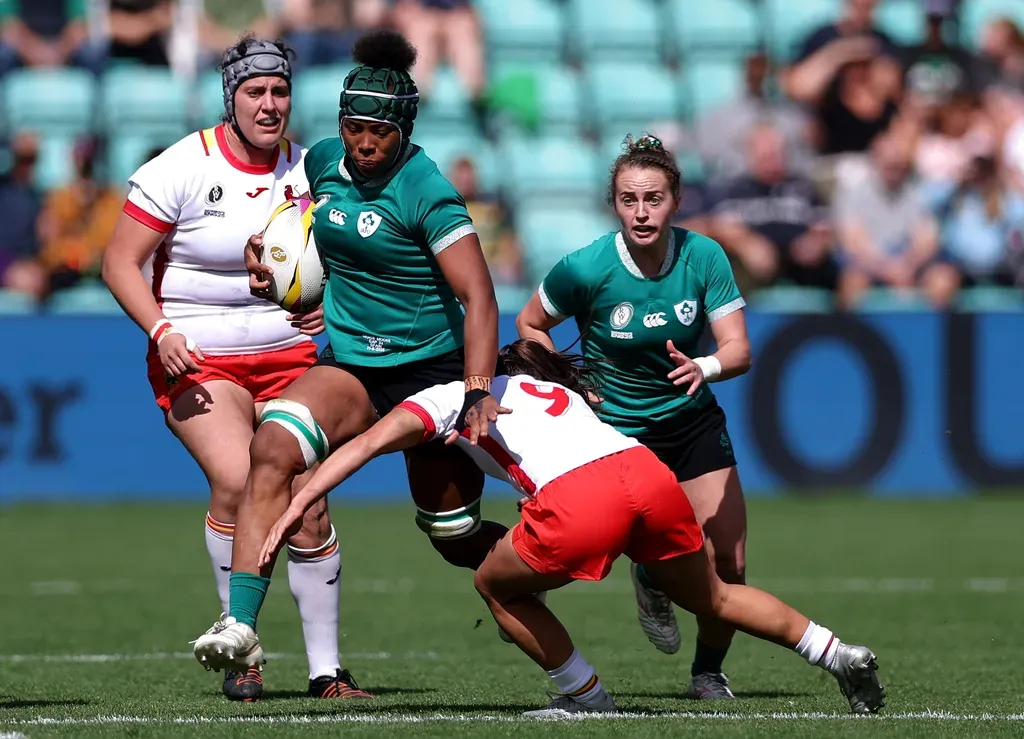

The Women’s Rugby World Cup has quietly transformed into something far more revealing than a championship event. It is now a mirror. A mirror that reflects the true health of national programs — their planning, depth, decision-making, and emotional discipline — rather than their ambition or public messaging.
For Australian fans, this shift is particularly important. The Women’s Rugby World Cup no longer asks whether a team is “heading in the right direction”. It asks whether the foundations are strong enough to survive pressure over multiple matches, short turnarounds, and unforgiving scrutiny. This article examines the modern Women’s Rugby World Cup as an assessment tool: how it exposes strengths and weaknesses, why performances swing so sharply, and what the tournament now demands from teams that want to be taken seriously.
The Women’s Rugby World Cup as a Stress Test
Every international match applies pressure, but the Women’s Rugby World Cup compresses that pressure into an intense, sustained cycle. Matches arrive quickly. Injuries accumulate. Tactical preparation must adapt on the fly.
In this environment, strong systems hold. Weak ones crack. That is why the tournament has become such a reliable stress test for national programs.
What the World Cup tests most aggressively
- Squad depth beyond the starting XV
- Clarity of game model under fatigue
- Leadership during momentum swings
- Discipline when decision-making slows
The Women’s Rugby World Cup does not reward short-term peaks. It rewards repeatability.
Why the Modern Tournament Feels Less Romantic
Some fans describe the modern Women’s Rugby World Cup as less expressive than earlier editions. That perception is not wrong — but it is incomplete.
As professionalism has grown, inefficiency has become costly. Risk is now calculated rather than instinctive. Teams understand that tournaments are lost more often through errors than won through brilliance.
Why caution has increased
- Improved defensive organisation across teams
- Greater punishment for breakdown penalties
- Higher fitness levels reducing counter-attack space
- Knockout consequences arriving earlier
The Women’s Rugby World Cup has not become dull — it has become exacting.
The Quiet Importance of Game Management
Game management has emerged as one of the most decisive skills in the Women’s Rugby World Cup. Teams that manage territory, tempo, and emotion consistently outperform more athletic opponents.
This management is subtle. It does not always show up in highlights. But it dictates where the game is played and how much stress each team absorbs.
Game management behaviours to watch
- Exit decisions after turnovers
- Kick selection under defensive pressure
- Patience inside the attacking 22
- Choice between taking points or playing territory
Strong game management keeps matches on a team’s terms.
Why Defence Now Drives the Tournament Narrative
In the modern Women’s Rugby World Cup, defence is no longer reactive. It is proactive. Defensive systems dictate attacking behaviour rather than respond to it.
Teams that defend well do more than prevent tries — they exhaust opponents, force rushed decisions, and generate territory through pressure rather than possession.
Characteristics of elite World Cup defence
- Consistent line speed without over-commitment
- Clear role definition on defensive edges
- High tackle completion under fatigue
- Minimal penalties inside the 22
Defence has become the tournament’s most reliable currency.
Set Pieces as Psychological Anchors
In a high-pressure environment like the Women’s Rugby World Cup, set pieces provide more than structure — they provide reassurance.
A stable scrum or reliable line-out allows teams to slow the game, reset communication, and regain emotional control. Conversely, set-piece instability increases anxiety across the squad.
Why set pieces matter beyond possession
- They regulate tempo when fatigue peaks
- They create predictable moments for leadership
- They reduce decision-making load
- They protect tired defensive systems
Teams that trust their set pieces play with calmer heads.
The Middle of the Tournament Is Where Reality Bites
The most revealing phase of the Women’s Rugby World Cup is not the opening match or the final. It is the middle.
This is where injuries mount, fatigue accumulates, and emotional energy drops. Teams that lack depth or clarity begin to unravel quietly.
Common signs of mid-tournament decline
- Rising penalty counts
- Late defensive adjustments
- Inconsistent exit execution
- Visible frustration after referee decisions
Strong programs stabilise here. Fragile ones slide.
Depth as a Competitive Equaliser
Depth no longer separates elite teams from the rest — it defines whether teams survive the tournament at all.
The Women’s Rugby World Cup exposes shallow squads quickly. Star players accumulate minutes. Minor injuries turn into performance drop-offs. Bench players become decision-makers.
What real depth looks like
- Minimal tactical adjustment after substitutions
- Clear communication from replacements
- Reliable execution of basics
- Confidence to manage tempo late
Depth is not about impact. It is about continuity.
The Mental Economy of Tournament Rugby
The Women’s Rugby World Cup demands careful management of emotional energy. Teams that burn too hot early often struggle later.
Successful sides conserve emotion. They celebrate briefly, reset quickly, and avoid chasing moments that are not there.
Mental skills that sustain campaigns
- Fast emotional recovery after errors
- Acceptance of refereeing interpretations
- Leadership clarity under stress
- Trust in preparation when confidence dips
Mental economy is often invisible — until it runs out.
The Australian Context: What the World Cup Reveals
For Australia, the Women’s Rugby World Cup functions as an audit. It confirms progress in physicality and resilience, while highlighting where control still slips.
The Wallaroos’ challenge is no longer belief. It is execution under pressure, especially in tight, low-scoring matches.
Key indicators Australian fans should watch
- Discipline inside the defensive 22
- Exit efficiency against elite sides
- Bench cohesion late in matches
- Leadership during momentum swings
These indicators reveal readiness more accurately than scorelines.
Knockout Matches: Where Systems Are Exposed
Once the tournament reaches knockout rounds, the Women’s Rugby World Cup strips away comfort. There are no recovery games. No narrative cushions.
Teams that rely on emotion falter. Teams that rely on systems endure.
Knockout-stage realities
- Tighter margins
- Higher penalty conversion value
- Set-piece pressure multiplied
- Bench decisions under intense scrutiny
Preparation reveals itself here.
The Metrics That Quietly Shape Outcomes
Beyond tries and possession, certain numbers consistently align with success at the Women’s Rugby World Cup.
| Metric | Why It Matters |
|---|---|
| Penalty count | Directly drives territory and scoreboard pressure |
| Tackle completion | Measures defensive durability |
| Set-piece success | Stabilises momentum and composure |
These numbers explain success more clearly than highlights ever could.
Why the Women’s Rugby World Cup No Longer Flatters Anyone
The Women’s Rugby World Cup has matured into a competition that does not flatter programs. It exposes habits, systems, and leadership under sustained pressure.
That honesty is not a problem. It is the tournament’s greatest strength.
FAQ: Women’s Rugby World Cup
Why does the tournament feel tougher now?
Because professionalism and tactical standards have risen across all teams.
What decides most matches?
Discipline, depth, and game management under fatigue.
Is attacking flair still important?
Yes — but only when built on patience and structure.
Final Thought: A Tournament That Reflects the Truth
The Women’s Rugby World Cup has become a mirror. It reflects not what teams hope to be, but what they actually are when pressure is sustained and margins disappear.
For Australian fans, viewing the tournament through this lens replaces frustration with understanding — and reveals exactly what elite women’s rugby now demands.
Hope starts a campaign. Structure finishes it.