
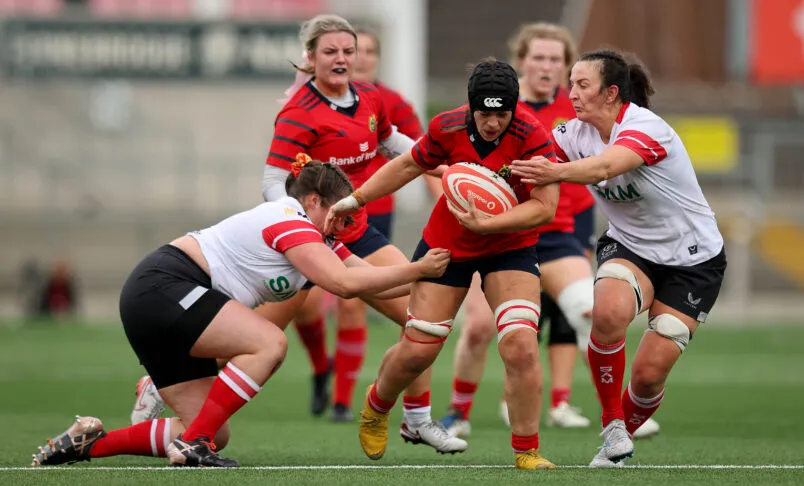
The Women’s Rugby World Cup 2029 is already being talked about as something more than a future competition. It is being framed — quietly but clearly — as a checkpoint. Not a celebration of growth, not a milestone of participation, but a moment where the women’s game will be judged by the same unforgiving standards as elite international sport everywhere else.
For Australian fans, this matters deeply. By 2029, patience will no longer be the default lens. Performances will be measured against expectation, not trajectory. This article explores why Women’s Rugby World Cup 2029 represents a shift in mindset, how the tournament is likely to play out on the field, what tactical and structural factors will define success, and how to watch it with a clearer understanding of what elite women’s rugby now demands.
Why Women’s Rugby World Cup 2029 Is Different in Tone
Previous editions of the tournament carried an implicit allowance for unevenness. Some teams were still developing. Others were ahead of the curve. Results were contextualised through access to funding, facilities, and pathways.
By the time Women’s Rugby World Cup 2029 arrives, that context largely disappears. Most competing nations will have had extended exposure to professional or semi-professional environments. Players will arrive with hundreds of hours of high-performance training behind them. The conversation shifts from “are they improving?” to “are they good enough?”
Why the tone changes in 2029
- Longer professional cycles across leading nations
- Increased test match volume between World Cups
- More experienced coaching and analysis staff
- Clearer performance benchmarks across competitions
This is why Women’s Rugby World Cup 2029 feels less forgiving — and more honest.
The Competitive Field: Narrower Gaps, Higher Stakes
One of the defining features of Women’s Rugby World Cup 2029 is expected to be compression. Not parity in the sense that everyone is equal, but compression in margins. The distance between winning comfortably and losing narrowly will be smaller.
This changes how teams behave. Conservative game management appears earlier. Risk tolerance drops. Pool matches are treated with knockout-level seriousness. One mismanaged fixture can derail an entire campaign.
How competition tightens by 2029
- Fewer runaway pool matches
- More defensive arm-wrestles
- Higher value placed on goal-kicking
- Greater importance of discipline
For viewers, this means Women’s Rugby World Cup 2029 will reward patience and understanding rather than spectacle alone.
How the Game Itself Will Look in 2029
The rugby played at Women’s Rugby World Cup 2029 will not feel revolutionary — but it will feel refined. Cleaner contact. Faster decision-making. Fewer moments of disorganisation.
As professional habits embed, players become more efficient rather than simply stronger or faster. Support lines improve. Defensive spacing tightens. Teams manage tempo with intent instead of reacting emotionally.
Expected stylistic characteristics
- Greater emphasis on territory control
- Reduced error rates under fatigue
- More effective kick-chase pressure
- Structured attacking phases inside the 22
The result is a game that punishes mistakes more quickly — and rewards discipline relentlessly.
Tactics Over Talent: The New Reality
By Women’s Rugby World Cup 2029, raw athleticism alone will no longer carry teams deep into the tournament. Tactical clarity will outweigh individual brilliance more often than not.
Teams that can manage exits, maintain defensive shape, and control breakdown tempo will consistently outperform sides that rely on momentum or emotion. Coaching detail becomes a competitive weapon.
Tactical areas that will decide outcomes
- Exit execution under pressure
- Breakdown discipline in defensive zones
- Set-piece stability late in matches
- Clear communication during momentum swings
Women’s Rugby World Cup 2029 will reward clarity more than creativity.
Depth: The Difference Between Competing and Contending
Depth has always mattered in tournament rugby. In 2029, it becomes decisive. Star players will still shape moments, but tournaments will be won by squads that maintain structure through all substitutions.
Bench players will no longer be judged on impact alone. They will be judged on reliability — their ability to preserve systems rather than disrupt them.
Why depth becomes non-negotiable
- High-intensity matches across all rounds
- Limited recovery windows
- Accumulated injuries over the tournament
- Increased psychological fatigue
A strong XV gets you noticed. A strong squad gets you to finals.
The Australian Context: Expectations Shift in 2029
For Australia, Women’s Rugby World Cup 2029 is not just another opportunity — it is a measuring stick. The Wallaroos’ development has been steady, with visible gains in physicality, resilience, and competitiveness.
By 2029, those gains must translate into control. Close losses will no longer be enough. Competitive performances will be judged by execution, not effort.
What Australian fans should monitor
- Consistency against top-tier opposition
- Discipline in high-pressure matches
- Bench impact in tight games
- Leadership during momentum swings
Women’s Rugby World Cup 2029 will clarify whether Australia has crossed from progress to contention.
Why Pool Matches Will Be Less Forgiving
As parity improves, early mistakes become more expensive. By 2029, slow starts and heavy rotation carry genuine risk.
Coaches must balance player welfare with result security. Misjudging that balance can end a campaign before it starts.
Why early matches matter more than ever
- Higher baseline competitiveness
- Reduced margin for experimentation
- Psychological pressure of expectation
- Cumulative fatigue effects
Every fixture becomes a test of judgment as much as performance.
Knockout Rugby in 2029: Control Over Chaos
Knockout matches at Women’s Rugby World Cup 2029 are expected to be unforgiving. Risk tolerance drops sharply. Territory becomes currency. Discipline decides outcomes.
Teams comfortable playing controlled, uncomfortable rugby will thrive. Those reliant on momentum will struggle when pressure peaks.
Knockout-stage realities
- Tighter margins
- Higher value of goal-kicking
- Set-piece pressure amplified
- Bench decisions under scrutiny
This phase separates preparation from ambition.
The Numbers That Will Matter Most
As analysis deepens, certain metrics will define success at Women’s Rugby World Cup 2029. Tries and possession will matter less than repeatable indicators.
| Metric | Why It Matters |
|---|---|
| Penalty count | Directly drives territory and scoreboard pressure |
| Tackle completion | Measures defensive sustainability |
| Set-piece success | Controls momentum and rhythm |
Teams that dominate these areas will consistently exceed expectations.
Why Women’s Rugby World Cup 2029 Will Be Judged Without Cushion
Women’s Rugby World Cup 2029 will not be evaluated through the lens of growth. It will be evaluated through performance. That is not pressure — it is progress.
The women’s game has earned the right to be judged on quality alone. Execution, depth, and consistency will be the standard.
FAQ: Women’s Rugby World Cup 2029
Why is Women’s Rugby World Cup 2029 so important?
Because it represents a maturity point where performance replaces potential as the main measure.
Will matches be closer?
Yes. Parity is expected to increase, leading to tighter contests.
What will decide most matches?
Discipline, depth, and tactical execution under pressure.
Final Thought: 2029 as a Reality Check
Women’s Rugby World Cup 2029 will not ask for belief. It will demand standards. It will reward teams that prepare for discomfort, manage pressure, and execute when fatigue clouds judgment.
For Australian fans, this tournament will offer clarity rather than comfort — a clear view of where the Wallaroos stand in a truly elite, global environment.
By 2029, women’s rugby won’t be proving it belongs. It will be proving who belongs at the top.