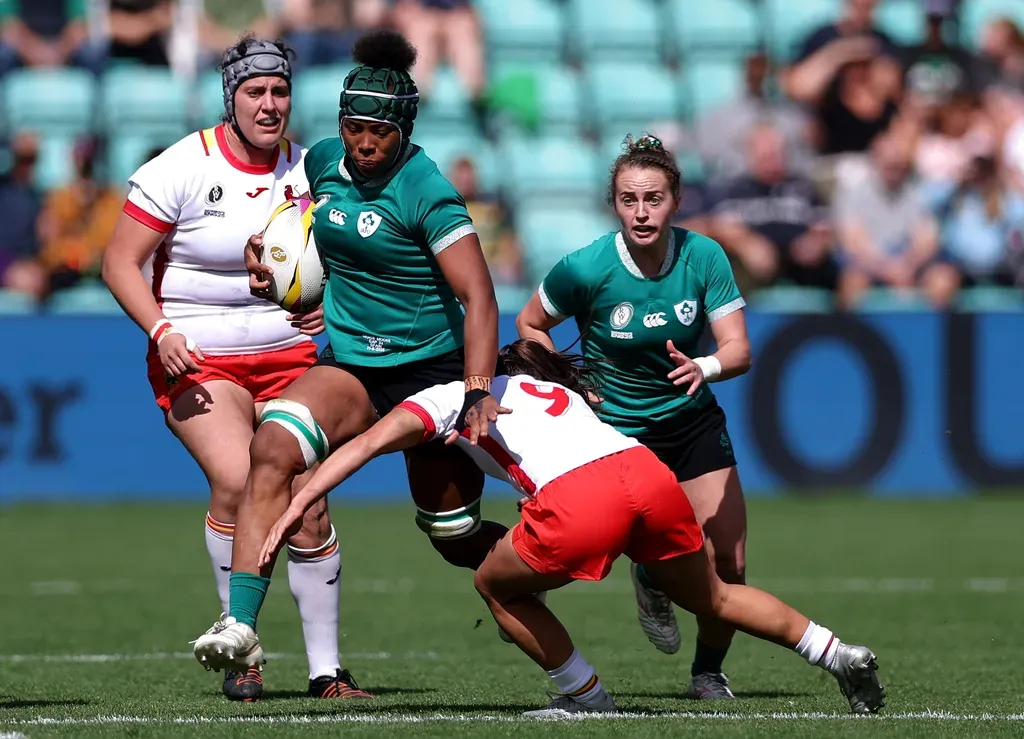

The Women’s Rugby World Cup is often judged by what unfolds on the field: tries scored, tackles made, trophies lifted. But the modern tournament tells a deeper story. Increasingly, the decisive moments happen long before players run out of the tunnel. They happen in planning rooms, performance meetings, and recovery schedules.
For Australian fans, this shift explains why results sometimes feel harsh or confusing. The Women’s Rugby World Cup has evolved into a competition where preparation, systems, and long-term decision-making carry as much weight as athletic ability. This article explores the tournament from that perspective — how it rewards foresight, punishes shortcuts, and exposes the true maturity of national programs.
The Women’s Rugby World Cup Is No Longer a Short-Term Test
In its earlier iterations, the Women’s Rugby World Cup could be influenced heavily by short-term form. A strong training block, a favourable draw, or a standout individual could carry a team deep into the tournament.
That era has passed. The modern World Cup stretches teams physically and mentally over weeks, not days. It tests how well programs manage fatigue, injury risk, and emotional load across an entire campaign.
What the tournament now evaluates
- Long-term conditioning and load management
- Clarity of game model under repeated stress
- Depth planning across all positions
- Decision-making consistency across matches
The Women’s Rugby World Cup has become a marathon disguised as a series of sprints.
Why Preparation Has Become a Competitive Weapon
At the highest level, most teams arrive with similar fitness and skill. The difference lies in how well they anticipate problems before they appear.
Preparation now includes scenario planning: defending narrow leads, playing with reduced possession, managing yellow cards, and closing out low-scoring matches. Teams that prepare for discomfort survive it.
Preparation trends shaping the tournament
- Detailed analysis of refereeing tendencies
- Pre-defined responses to momentum swings
- Clear protocols for late-game management
- Rotation strategies aligned with recovery data
In the Women’s Rugby World Cup, surprises usually hurt the unprepared more than the inferior.
The Decline of Improvisation Under Pressure
Improvisation once defined the charm of women’s rugby. In the modern World Cup environment, it is increasingly risky.
As defensive systems improve and fatigue accumulates, instinctive decisions are more likely to fail. Structured play offers safety when clarity fades.
Why structure now outweighs spontaneity
- Defensive lines reset faster
- Counter-attack space disappears quickly
- Errors are punished immediately
- Emotional decisions compound fatigue
This does not eliminate creativity — it channels it into moments that matter.
Territory Management as a Reflection of Trust
One of the clearest signs of a mature World Cup team is its relationship with territory. Teams comfortable without possession often trust their systems more deeply.
Rather than forcing attacks from deep positions, successful sides kick early, chase hard, and defend patiently. Territory becomes a form of control rather than concession.
How territory shapes match outcomes
- Forces repeated defensive sets
- Increases penalty probability
- Reduces counter-attack exposure
- Slows the game when fatigue rises
In the Women’s Rugby World Cup, trust in defence is often rewarded more than ambition in attack.
Set Pieces as Anchors in a Chaotic Tournament
When schedules compress and fatigue builds, set pieces become anchors. They provide moments of structure in an otherwise fluid contest.
Teams with reliable scrums and line-outs gain more than possession — they gain emotional stability. They can reset, communicate, and breathe.
Why set pieces carry psychological weight
- They slow momentum against tired teams
- They create predictable leadership moments
- They reduce decision-making complexity
- They protect fragile defensive phases
Strong set pieces allow teams to think clearly when pressure peaks.
The Mid-Tournament Phase: Where Campaigns Bend or Break
The middle of the Women’s Rugby World Cup is often overlooked. It lacks the excitement of opening fixtures and the drama of finals. Yet it is where campaigns are quietly decided.
Fatigue accumulates. Injuries surface. Emotional energy dips. Teams that planned poorly begin to show cracks.
Common mid-tournament warning signs
- Increased penalty counts
- Breakdown timing errors
- Defensive spacing inconsistencies
- Frustration after referee calls
Strong programs stabilise here. Others unravel slowly.
Depth Planning: The Difference Between Hope and Reality
Depth is not just about having replacements — it is about trusting them. In the Women’s Rugby World Cup, teams that hesitate to rotate often pay a price later.
Well-planned squads integrate depth early, allowing players to step in seamlessly under pressure.
What effective depth planning delivers
- Consistent execution across substitutions
- Reduced injury risk
- Greater tactical flexibility
- Psychological security for starters
Depth is not insurance. It is strategy.
The Mental Cost of Short Turnarounds
The Women’s Rugby World Cup schedule is unforgiving. Short turnarounds demand rapid emotional recovery as well as physical recovery.
Teams that linger on past results — good or bad — lose clarity. The ability to reset mentally becomes a competitive advantage.
Mental skills that sustain campaigns
- Rapid emotional decompression
- Clear post-match routines
- Leadership reinforcement after losses
- Focus on process over outcome
Mental freshness is often the first casualty of poor planning.
The Australian Lens: Lessons Hidden in the Process
For Australia, the Women’s Rugby World Cup increasingly highlights process rather than promise. The Wallaroos have improved physically and competitively, but process consistency remains the next frontier.
Managing territory, discipline, and energy across consecutive matches is now the true benchmark.
Key process indicators Australian fans should watch
- Exit efficiency late in matches
- Penalty trends across tournament phases
- Bench cohesion under pressure
- Leadership communication after setbacks
These details reveal readiness more honestly than scorelines.
Knockout Matches Reward Long-Term Thinking
When the Women’s Rugby World Cup reaches knockout stages, the benefits of long-term planning become visible.
Teams with managed workloads defend longer, think clearer, and make fewer errors under pressure.
Knockout-stage realities
- Compressed scorelines
- Penalties turning into points
- Set-piece reliability under fatigue
- Bench trust tested
Preparation shows itself when recovery windows disappear.
The Numbers That Reveal Planning Quality
Beyond tries and possession, certain metrics reflect the quality of preparation at the Women’s Rugby World Cup.
| Metric | What It Reflects |
|---|---|
| Penalty consistency | Discipline and emotional control |
| Second-half errors | Fatigue and workload management |
| Set-piece success | Structural reliability under stress |
These metrics often predict outcomes before the scoreboard does.
Why the Women’s Rugby World Cup Now Rewards Patience
The modern Women’s Rugby World Cup rewards teams willing to play the long game. Teams that chase immediate returns often burn out. Teams that manage energy, emotion, and expectation endure.
This is not conservatism — it is professionalism.
FAQ: Women’s Rugby World Cup
Why does preparation matter more now?
Because competitive gaps have narrowed and fatigue plays a larger role over longer tournaments.
What decides most matches?
Discipline, territory control, and decision-making under fatigue.
Is individual brilliance still important?
Yes — but it is most effective within a well-managed system.
Final Reflection: A Tournament That Rewards Thinking Ahead
The Women’s Rugby World Cup has become a competition that rewards those who think ahead rather than react late. It exposes shortcuts, punishes poor planning, and elevates teams built on patience and structure.
For Australian fans, seeing the tournament through this lens turns confusion into clarity — and reveals exactly what elite women’s rugby now demands to succeed.
Talent opens the door. Planning decides who stays.